


Windowsill Reveries: Artist Statement
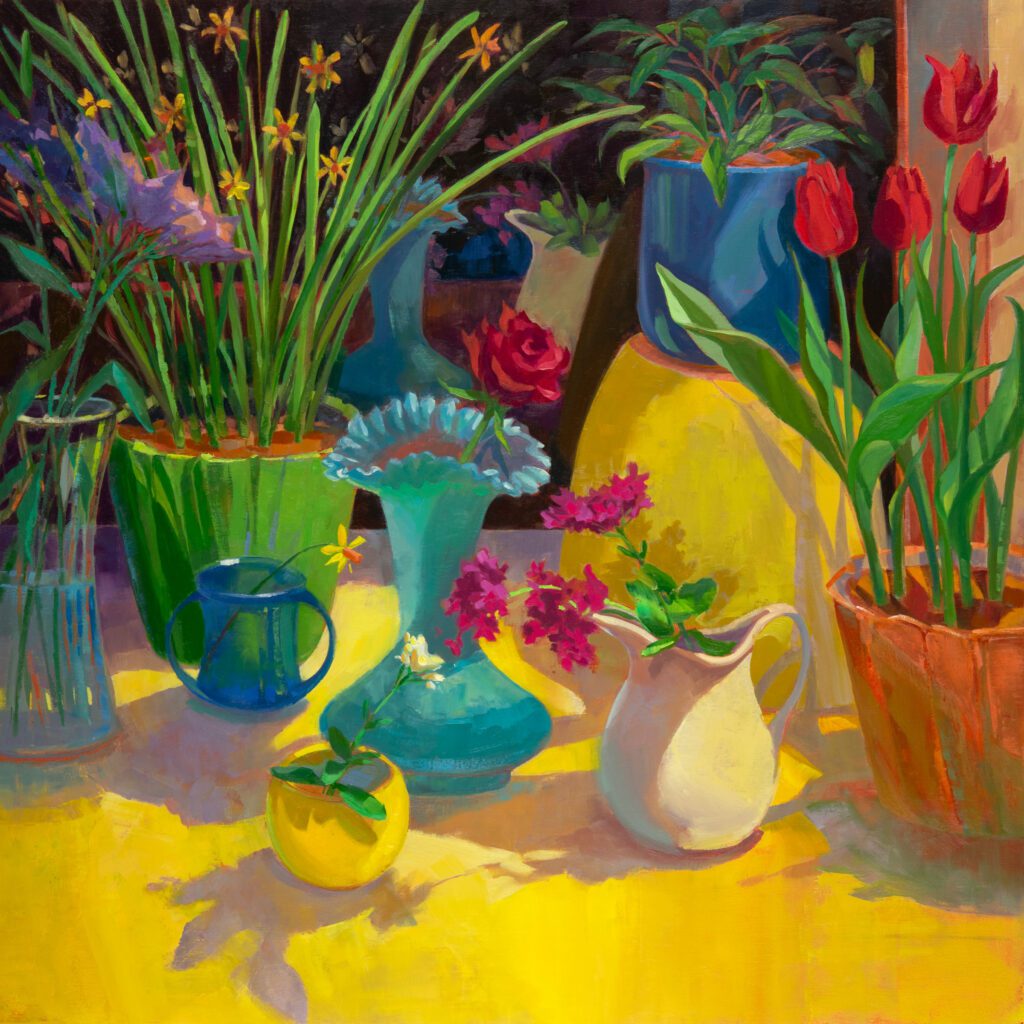
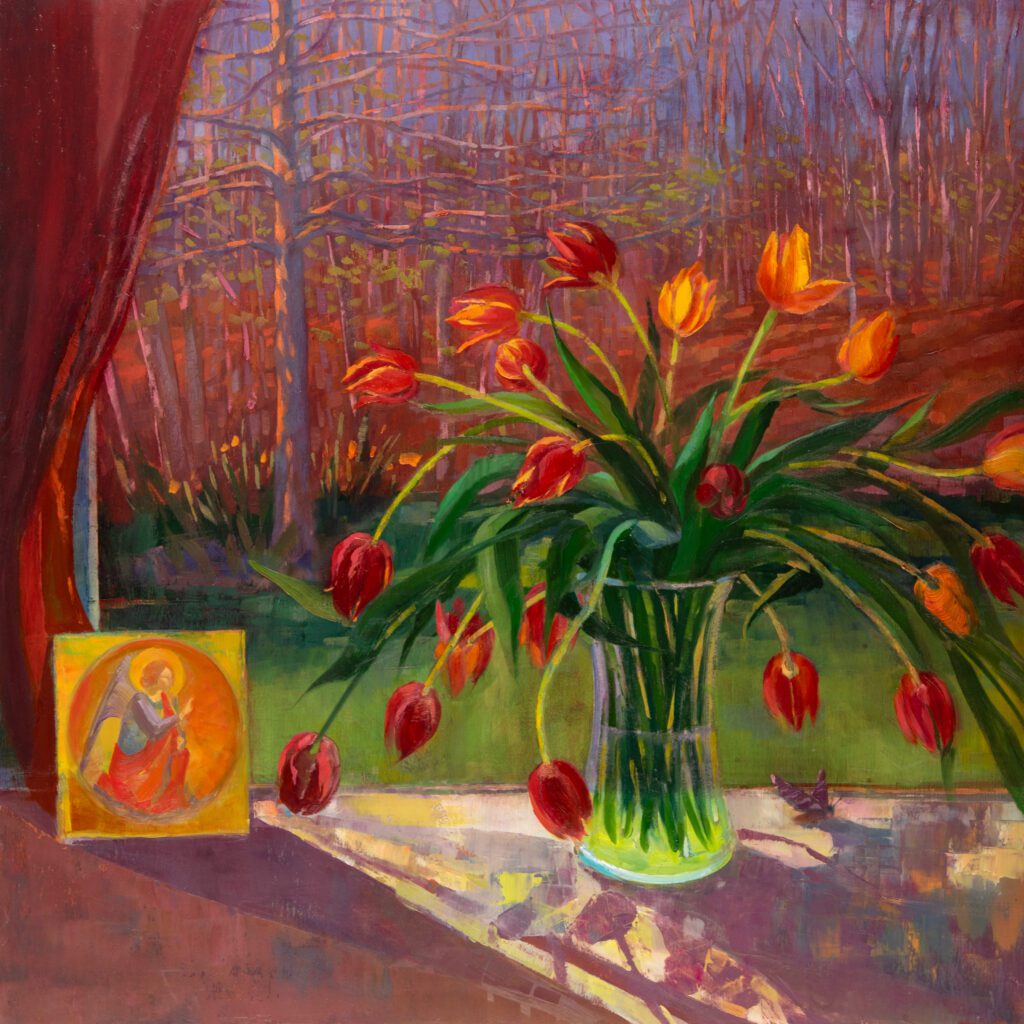
My still life compositions feature recurring motifs that suggest a continuity across generations: heirloom vases, souvenirs from long ago travels, a grown son’s childhood cup, a carved wooden angel, postcards from museums, and small treasures left behind by departed parents. Arranged on the windowsill of my studio alongside flowers and plants, these objects gather like actors on a stage, illuminated against the changing world beyond the glass. Bathed in the shifting light of day, or the stillness of a lamp at night, these enduring objects carry oblique narratives of the past, while blooms and bulbs embody both the fleeting beauty of the present and promises of the future.
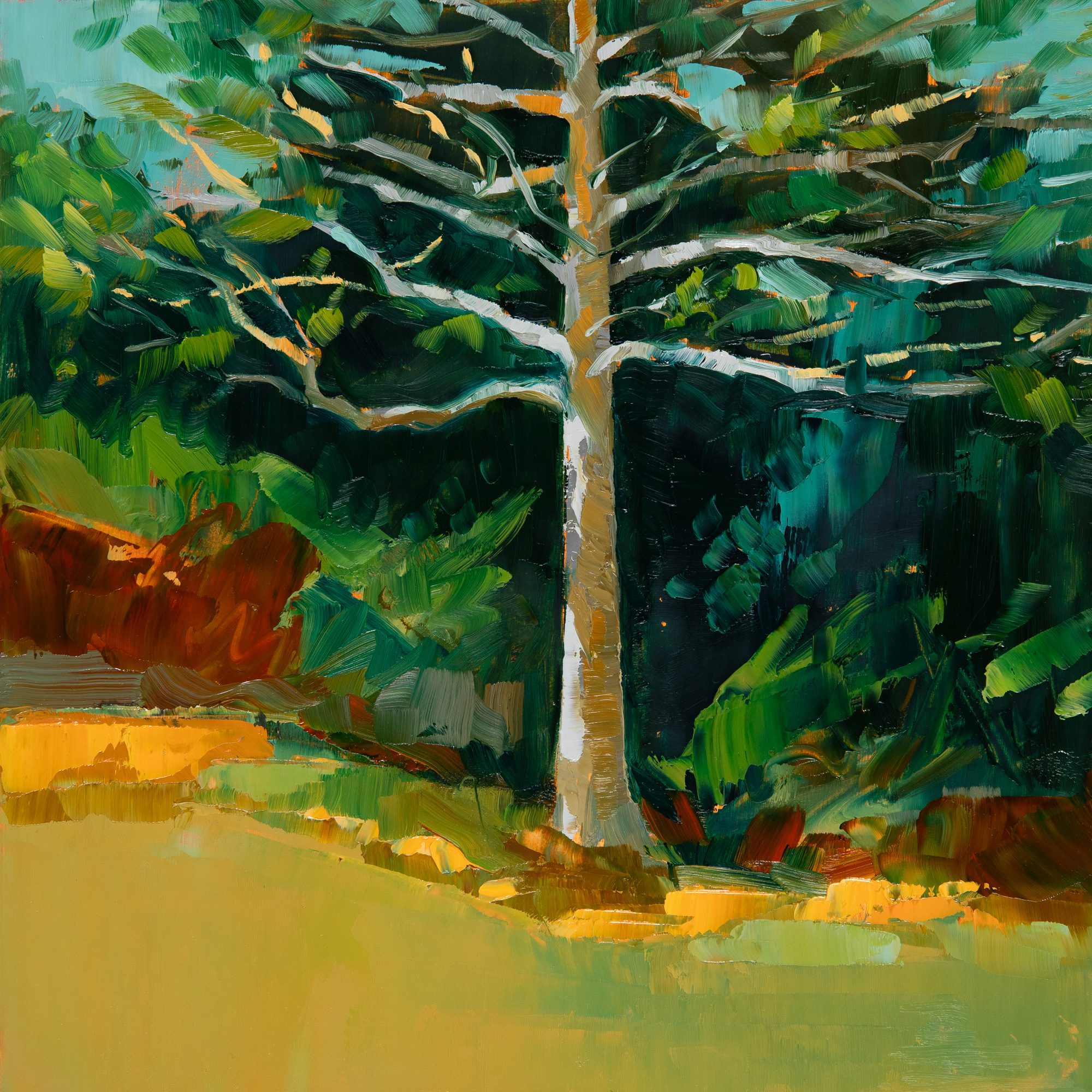
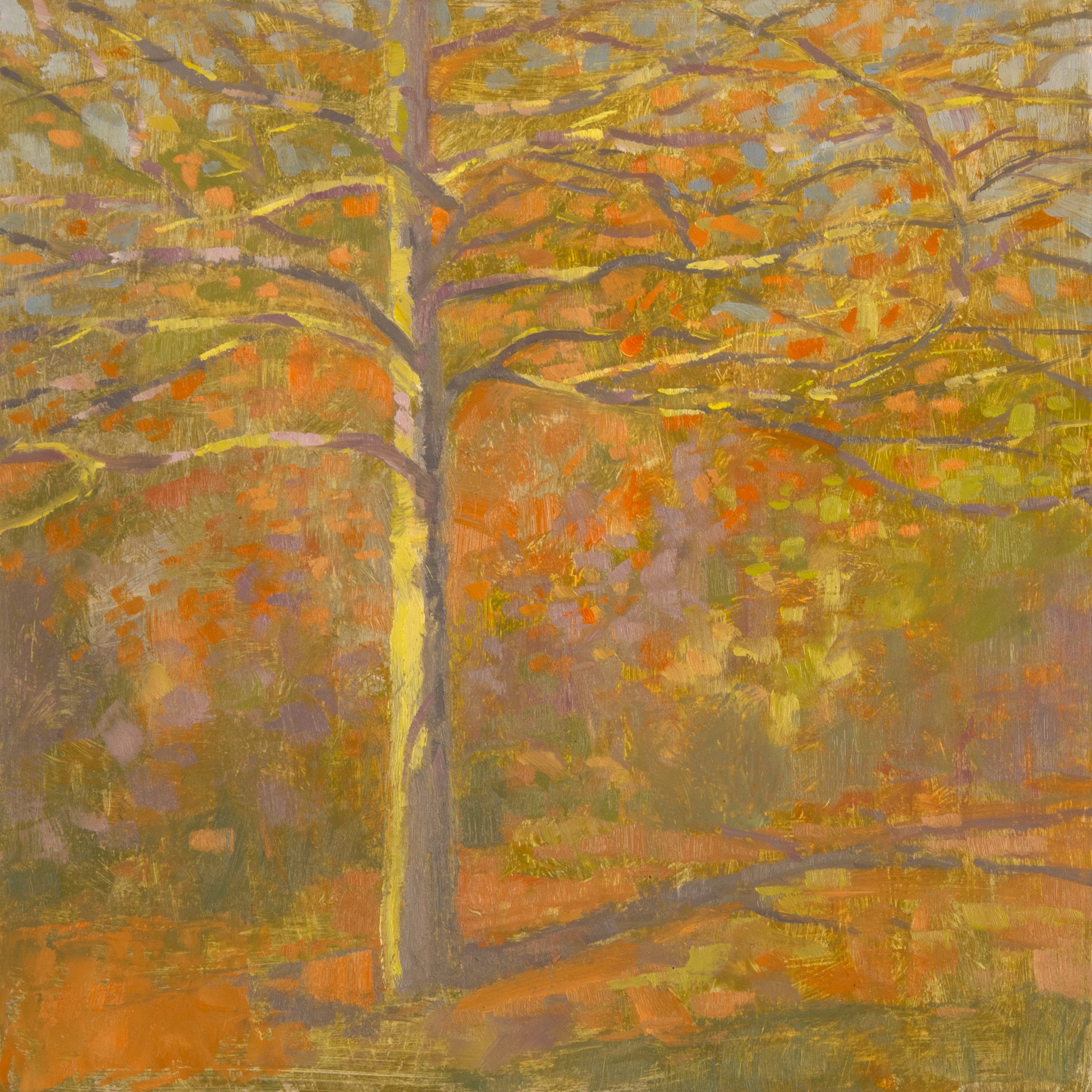
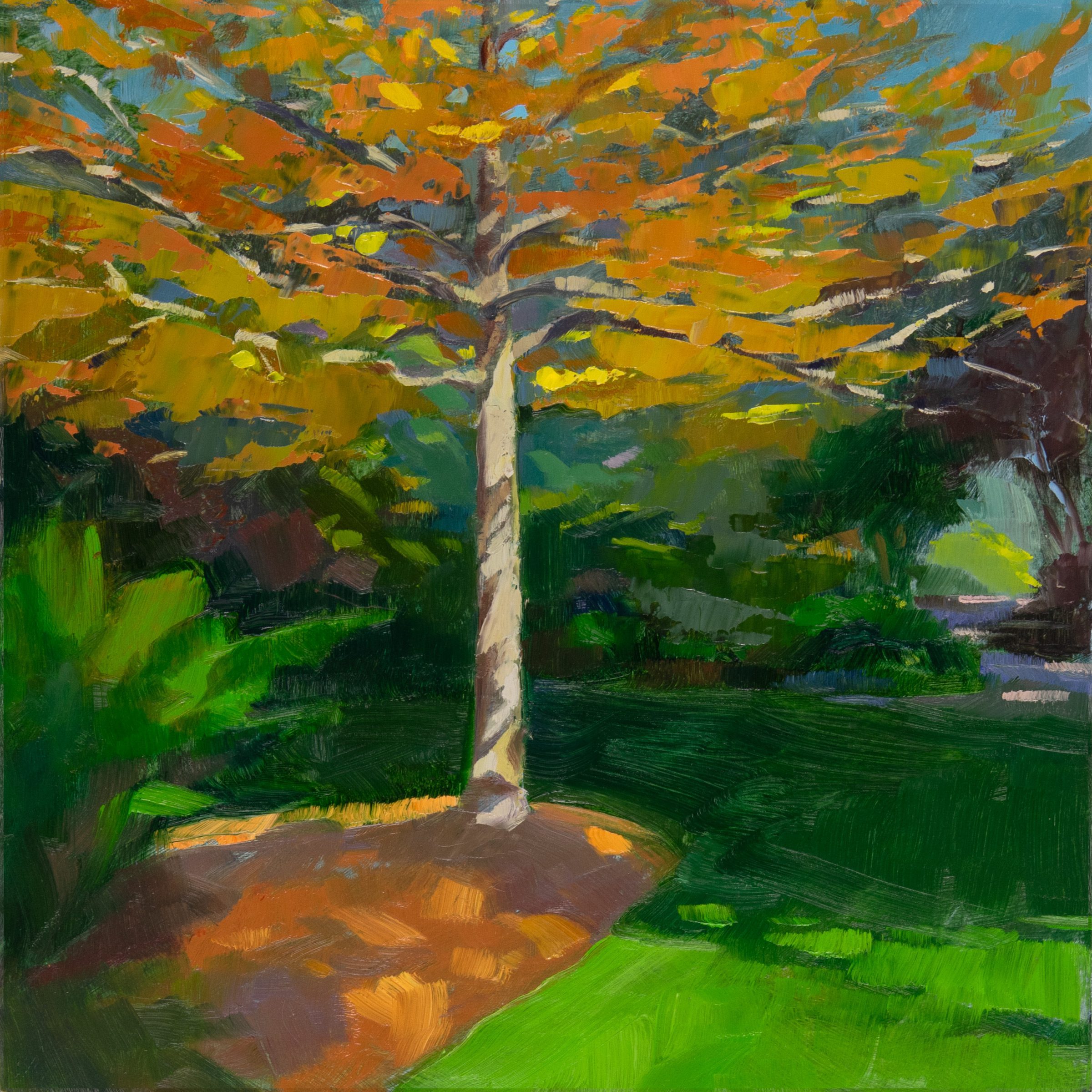
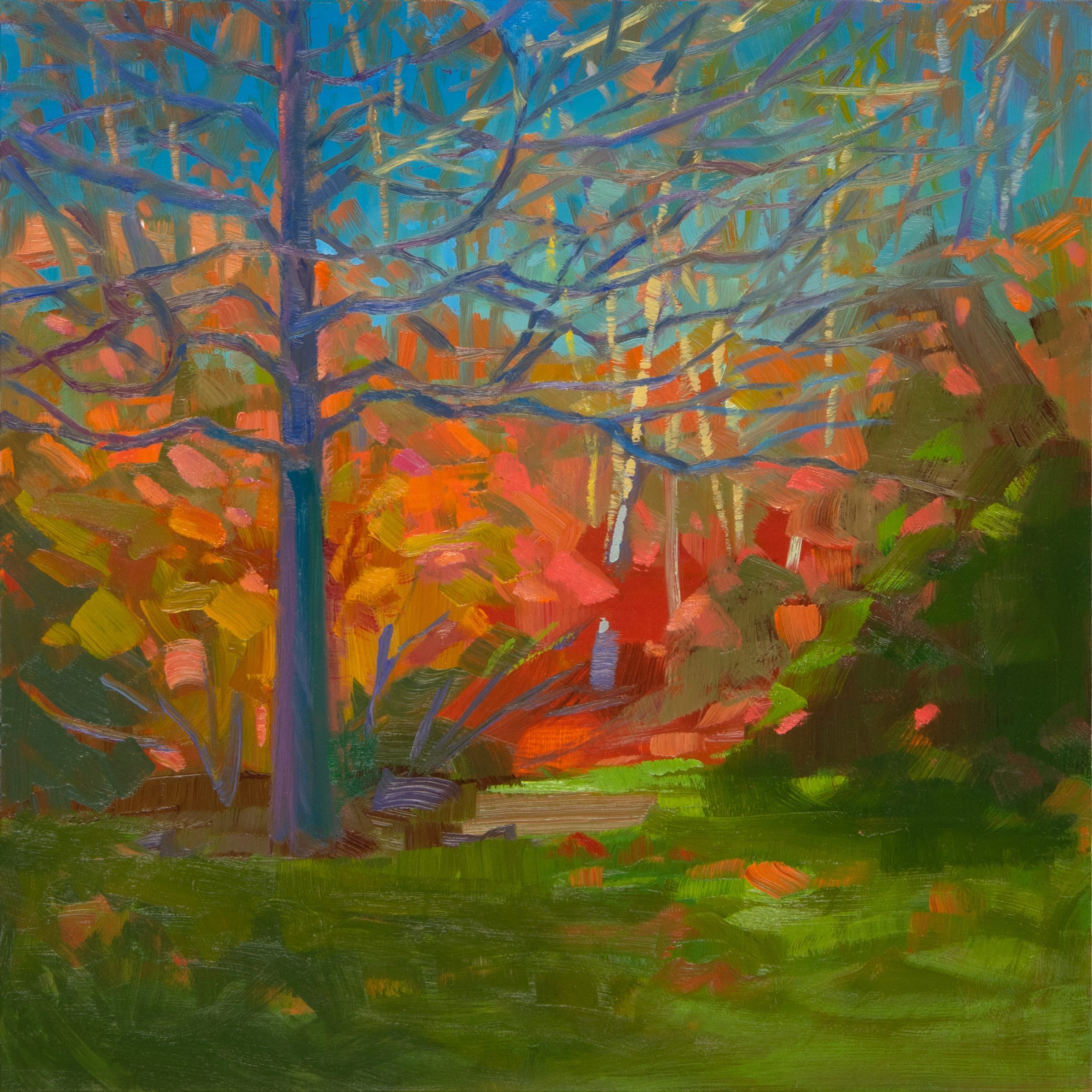
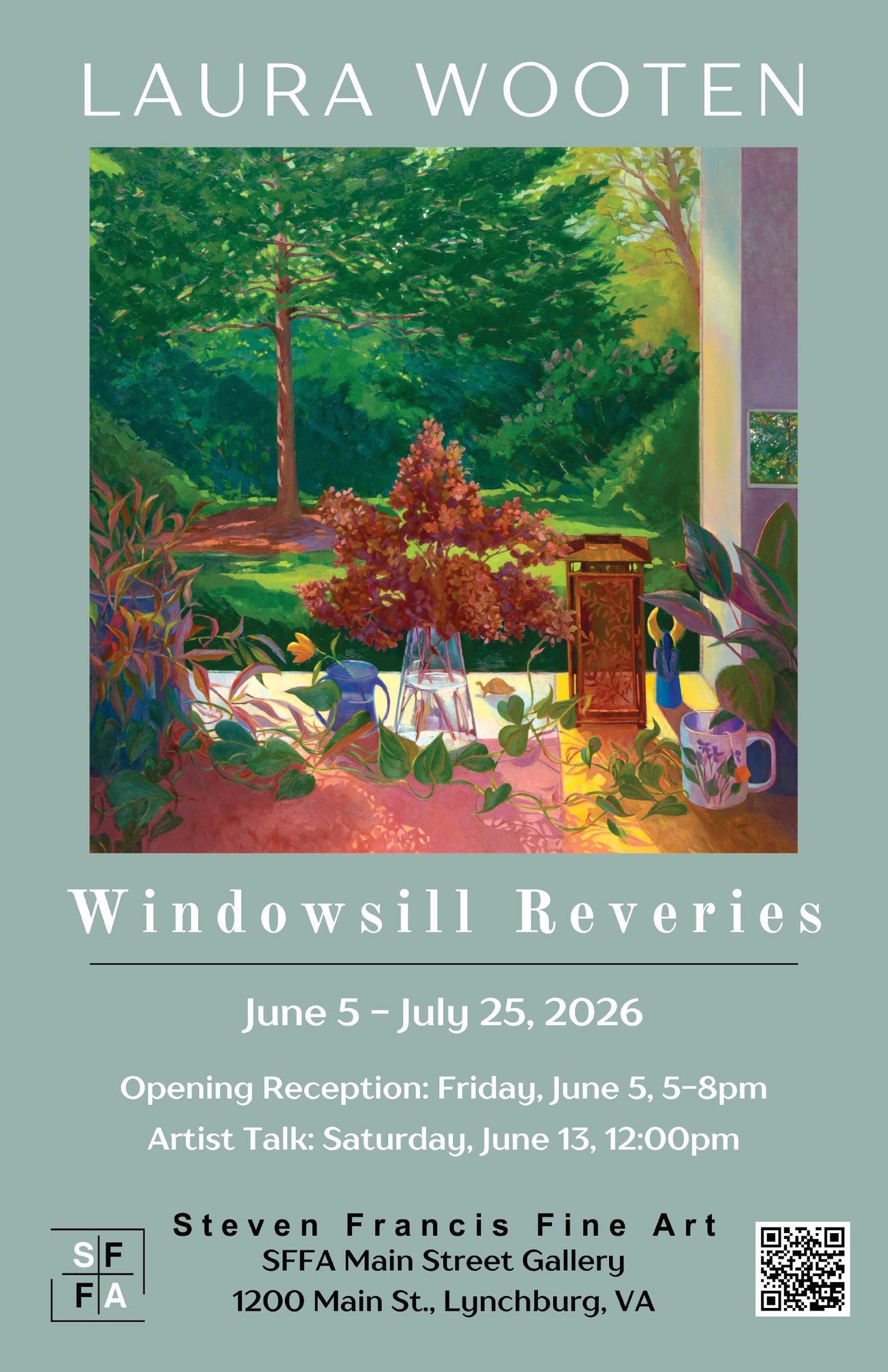
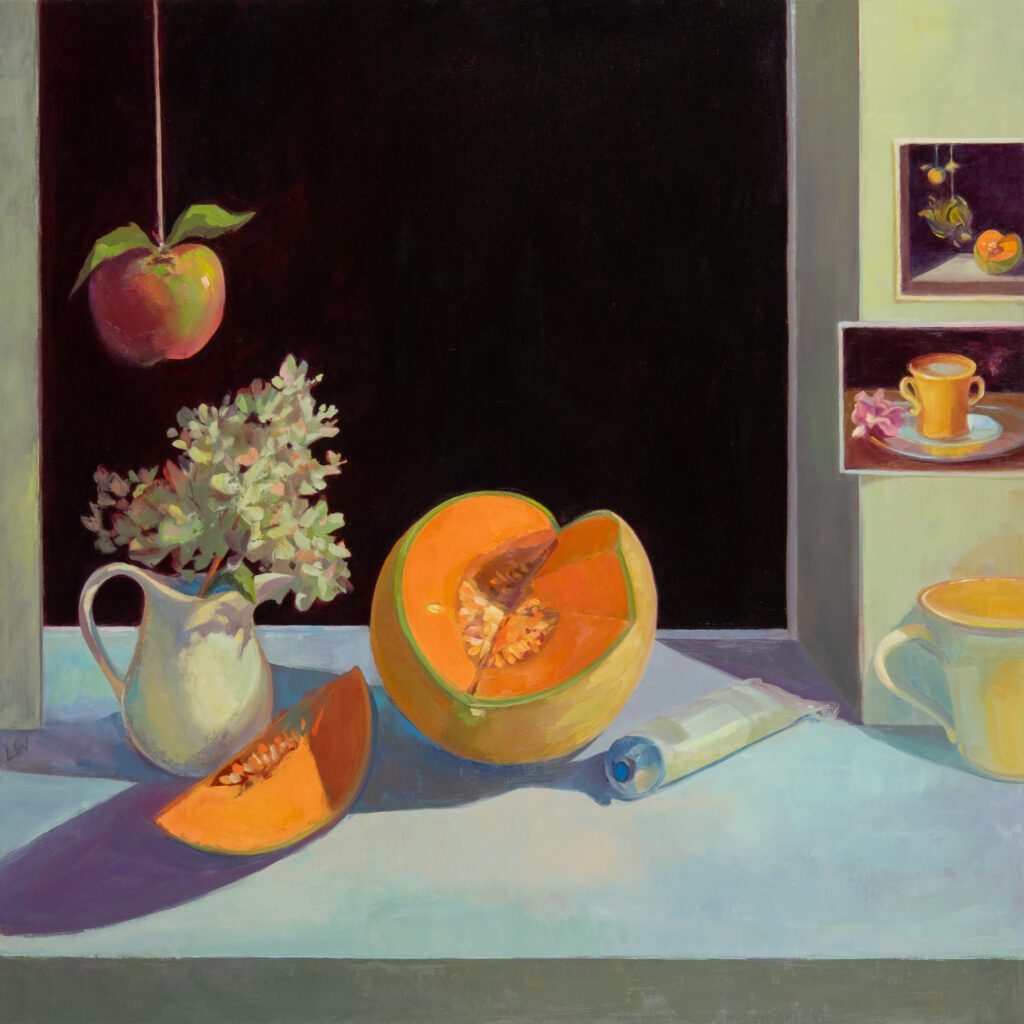
Many of the works look outward through the studio window to the black gum planted when my son was a small boy. As I tended the tree, I was also cultivating my family life, and over the years it grew tall and resilient alongside my son. Whether sporting its lush green canopy in summer, or its resplendent red mantle in autumn, the tree is both witness and measure of time. I have included both new and earlier paintings of the tree in the exhibition to underscore my long commitment to observing its growth and transformation. Some paintings are done at night, when the tree is obscured, and the window turns black. This reverent darkness behind the colorful still life arrangements alludes to the ever-present wonder and mystery of nature and the infinite.
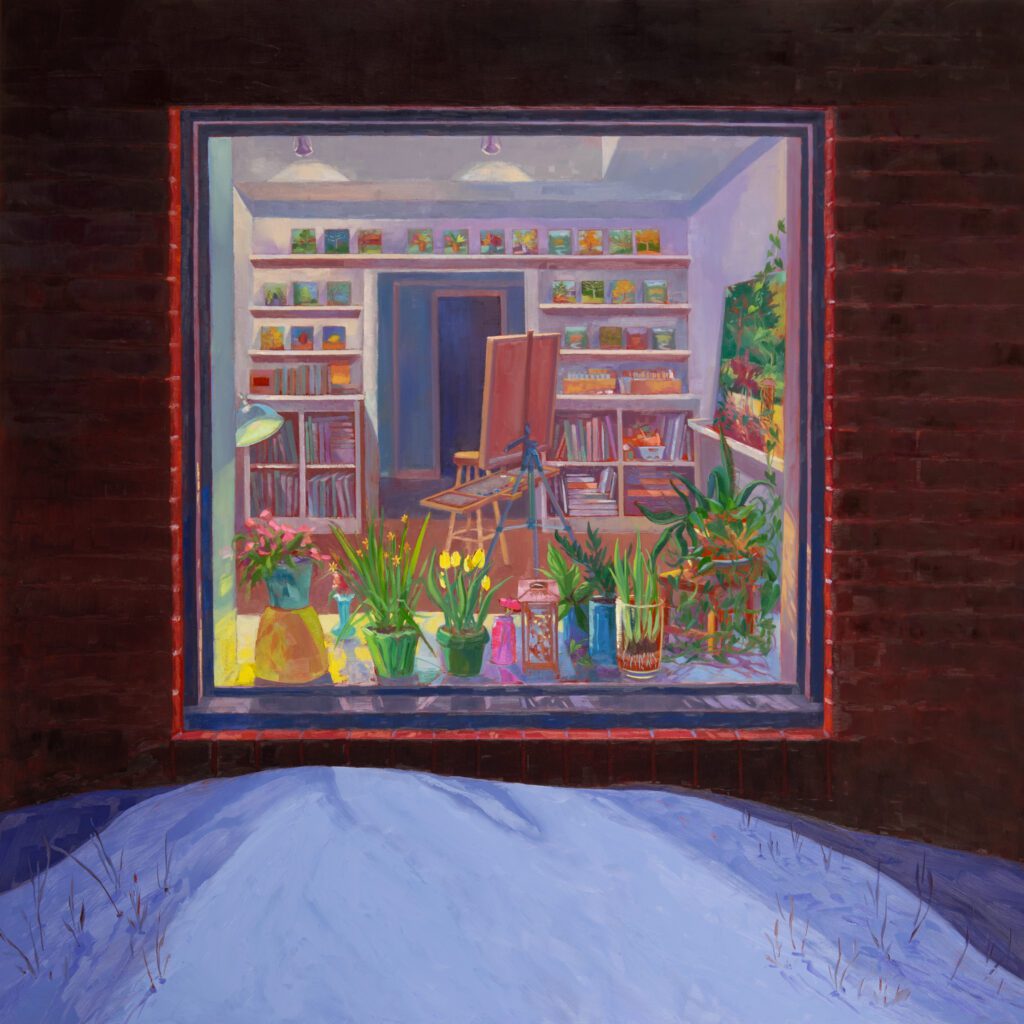
Some paintings explore different windows within my home: an open breakfast-room window frames brilliant fall woods reflected across a glass tabletop; a bathroom window casts sunlight onto a tub framed by glittering green tiles. In two works, the point of view shifts outside, looking inward toward my warmly lit studio where flowers and gathered objects glow against the night or merge into uncanny reflections across the picture glass. The studio appears from the outside as a creative incubator, a nurturing private world of color and imagination, where vining plants are allowed to ramble and flowers bloom even in the dark of winter. Throughout the exhibition, the window operates as a threshold between interior and exterior, domestic life and the natural world, intimacy and expansiveness.
Postcard reproductions by master painters occasionally appear within the still life arrangements, taped to the wall or resting among the objects. These gestures acknowledge my ongoing conversation with art history. As I grappled with the complexity of summer foliage outside the window, I found guidance in the work of Fairfield Porter, the beautifully merged and simplified shapes of The Plane Tree taped to the wall as teacher. Fra Angelico, Juan Sánchez Cotán, Zurbarán, Henri Fantin-Latour, Pierre Bonnard, and Georgia O’Keeffe also join the studio conversations as collected postcards slip into the compositions. Such references situate these personal scenes within a broader continuum of painters seeking to translate lived experience into form, color, and light.
Rooted primarily in direct observation, the paintings are built slowly from life, incorporating memory, imagination, and occasionally preparatory drawings or a photographic reference as flowers die and light fades. While the invention of narrative threads is an animating force in my work, my enduring love is for the fundamentals of painting itself: the modeling of form, the orchestration of color, and the articulation of light. I choose objects as much for their shapes and chromatic relationships as for their personal histories. Close looking is an act of curiosity and care as I examine both my inner and outer worlds. Through this process, visual dynamics and color harmonies carry the emotion of the painting, conveying both the intimacy of domestic space and the larger rhythms that hold it.
This body of work began shortly after the death of my father. While clearing out his home, I encountered objects that held the weight and beauty of a life fully lived. At the same time, my son was preparing to graduate from college and step into his own independent life. The paintings grew from this convergence: a period marked by love and loss, departure and continuity, grief and profound gratitude. This body of work is a visual meditation on what can stay and what inevitably changes. The windowsill becomes a place where life’s transience and endurance meet, where loss and joy coexist, and where the act of painting itself becomes a form of devotion.
Laura Wooten, Spring 2026